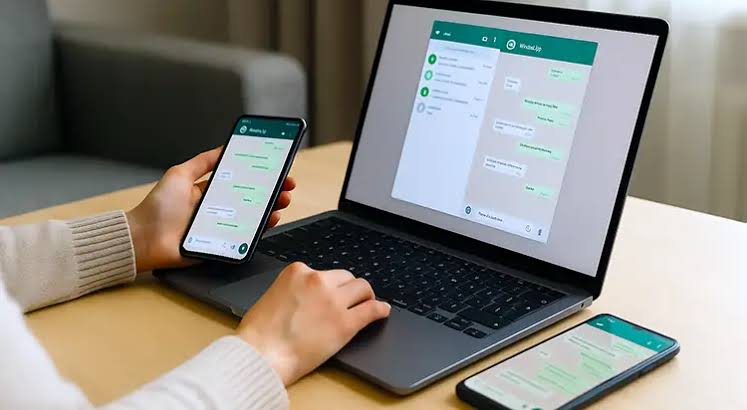
Businesses and people alike are accustomed to managing WhatsApp messages using a computer. It is one of the world’s most popular messaging apps for private and business messaging with over 2 billion users in over 180 countries and is free to use. WhatsApp’s Linked Devices feature allows users to bring up to four other devices into the same WhatsApp account, so that the messages can be synced across browsers and desktop apps without relying on the phone being on the Internet at all times.
For many users, WhatsApp Web (the browser version) is their preferred messaging method, as they use it to send messages from their PC without having to install software. Simply visit the WhatsApp Web site, scan a QR code and your conversations synchronize, allowing you to reply on a larger screen, type quicker, multitask, and have multiple chats open.
As for the usage, WhatsApp Web is perfect for ad hoc use on shared or temporary devices, while WhatsApp Desktop is the best option when using a work computer on a daily basis, with a more constant app-based experience thanks to their features, among which pinned chats, unread markers, keyboard shortcuts, notifications, voice and video calls.
In this 2026 guide, we’ll take you step by step through the usage of WhatsApp Web and WhatsApp Desktop, discuss if you can log in without a QR code, outline key differences, and point out WhatsApp’s limitations for business and team use. We’ll also discuss how platforms like Omnichat, a Meta-approved WhatsApp Business Solution Provider (BSP), can take conversations beyond mere messaging to enable multi-user access, automation, analytics, broadcasting, and chatbots to help your team scale conversations.
WhatsApp Web is what?
WhatsApp Web is the web app of the popular messaging app, WhatsApp, which is compatible with any modern web browser. An application, which is not browser dependent, is also available for PC users. It enables you to sync your WhatsApp number from your mobile with your computer’s web browser or desktop application.
After logging in, you can manage conversations, send and receive messages, and share files from your desktop. WhatsApp Web has a larger, full keyboard for efficient longer messaging. It’s also possible to drag and drop files up to 2GB straight into chats on WhatsApp Web.
Check Some of the Tips Below to See How you Can Use WhatsApp Web (Step-by-Step Guide)
- It’s easy to set up WhatsApp Web. Simply follow these simple steps:
- Go to the Open web.whatsapp.com in your computer’s browser.
- Open WhatsApp on your cell phone.
- On Android, open the app to get ready to scan the QR code and sync your chats.
- On your device, go to Settings (or Menu) and choose Linked Devices.
Tap Link a Device and scan the QR code shown on your browser with your android device.
Once scanned, your WhatsApp chats will automatically synchronise, and you’ll be ready to chat directly from your browser.
Note: The first log-in to WhatsApp Web will need you to scan a QR code to securely connect your phone. Unless you tick ‘Keep me signed in’, you will need to log in manually. To log out of WhatsApp Web, simply click the respective button in the browser or on the phone. If the phone hasn’t been used for 14 days, re-link it to stay logged in or linked devices will delete themselves if the main phone is inactive for 14 days.
Is WhatsApp Web Svailable Without QR Code?
The old method of logging into WhatsApp Web was by scanning a QR code, but WhatsApp has finally made it possible to log in with your phone number. Users can also log in using the web app with their registered WhatsApp number and confirm the login request in the mobile app to connect the device, rather than scanning.
This phone number log in feature enhances convenience and flexibility, benefitting small business owners and customer support staff frequently working across multiple devices. Moreover, WhatsApp secures all messages exchanged while logging in, adding to the protection of user privacy and a seamless and efficient login process.
What is WhatsApp Desktop?
WhatsApp Desktop is a free app that’s available for Windows and Mac computers that lets you access WhatsApp’s messaging functionality on your desktop. While Web version of WhatsApp (WhatsApp Web) requires a browser and a QR code to log in for the first time, the Desktop version doesn’t require a browser and gives users an independent, dedicated experience.
Overall, WhatsApp Desktop is more ideal for regular utilization on a private work PC, where it opens quicker, works better and will keep on working regardless of whether the telephone’s web browser shuts down. All of the features are available almost as you would find in the regular app, but in a more stable and committed environment (text messaging, voice notes, file sharing, and group chats).
To use WhatsApp Desktop (Step-by-Step Guide):
- Download the App: Go to whatsapp.com/download and select Windows or Mac.
- Install: Open the file you downloaded and follow the instructions on the screen to install WhatsApp Desktop.
- Open WhatsApp Desktop: Open the installed app (you will see QR code on your screen).
- Open WhatsApp on Your Phone: Go to Settings > Linked Devices on your Android device. (For iPhone, tap Settings > Linked Devices.)
- Link Your Device: Tap Link a Device, then point your phone’s camera at the QR code on your desktop app.
- Sync Chats: Your messages and media automatically update as soon as the code is scanned. You’ve now got the ability to send and receive WhatsApp messages direct from your computer.
WhatsApp Desktop also Enables you to Place Voice and Video Calls Right From your Desktop App
There are some restrictions to WhatsApp Web for Business Accounts and Teams.Due to certain restrictions, WhatsApp Web for Business Accounts and Teams is unavailable.
While WhatsApp Web and Desktop are great tools for personal use, there are a number of aspects where they might prove to be a limitation for businesses:
- Single User Access: WhatsApp Web and Desktop offer single user access per session. This restriction can be an obstacle for organizations that require concurrent access by multiple users for customer interaction management.
- Device Dependency: WhatsApp Web requires your connected smartphone to keep on the Internet at all times. This dependency can lead to disruptions if your mobile connection is unstable or your phone’s battery drains.
- Limited Automation Features: WhatsApp Web is missing some key business functionalities like automation tools, customer segmentation, and customised messaging features, which may hinder scaling customer service or marketing campaigns.
- Broadcast Limitations: The WhatsApp Business App only allows small businesses to send messages to 256 contacts that have saved their number, so they cannot reach as many people as they would like.
- Business App lacks Analytics: WhatsApp Business App doesn’t include analytics to help businesses monitor the performance of their campaigns or customer engagement.
- Risk of Account Ban: Using a personal WhatsApp account or the WhatsApp Business App to send bulk promotional messages can violate WhatsApp’s terms of service, leading to permanent account bans without recovery options.
With these limitations, small businesses can easily exhaust the capabilities of the WhatsApp Business App, and large businesses need more powerful options. The WhatsApp Business API is optimized for medium to large businesses and helps them reach large audiences, manage their WhatsApp business account efficiently and allows multiple users to access the account. Further, the WhatsApp Business API is compatible with CRM integrations such as Salesforce and HubSpot, something that the regular WhatsApp Business App can’t do.
For enterprises seeking robust solutions to handle extensive interactions, automate customer engagement, or accommodate multi-user access, dedicated platforms such as the WhatsApp Business Platform, of which Omnichat can master and enrich, will likely work best.
Omnichat vs WhatsApp Web: Multi-User, Multi-Device Support for Teams
Although WhatsApp Web is great for personal use, it becomes cumbersome if businesses require more than one person to handle customer queries effectively. WhatsApp Web is a messaging app that can be utilized for customer involvement and automation, and it can be incorporated with third-party usefulness devices for expanded capabilities. Omnichat is here to help—designed specifically for teams who need scale, visibility, and control.
True Multi-User Access: WithOmnichat’s WhatsApp Business API, multiple team members can access the same WhatsApp account at the same time. No more “one user per device” limitation—all can be on the same page, work together in real time, and act in real time.
Multi-Device Flexibility: Omnichat synchronizes all interactions seamlessly, whether on desktop, laptop, or mobile devices. No fear of losing a message as someone closes a tab or looses her/his phone connection.
Centralised Conversation Management: No need to copy and paste messages between several WhatsApp sessions, or change devices. All your WhatsApp chats (and other messaging apps) are in one place with Omnichat’s all-in-one dashboard. The multi-channel customer service interface makes it easy for your team to remain organized, assign chats and respond quickly.
Omnichat’s team collaboration features ensure that your team can work together seamlessly, including conversation auto-assignment, internal notes, and tagging. This will lead to smoother handoffs, less misunderstandings, and improved customer experiences.
Scalability and Analytics: Your needs scale up as your business expands. Omnichat has built-in performance tracking and analytics, such as response time, resolution rate and workload levels of your teams, which will help you optimize on an ongoing basis. However, WhatsApp Web doesn’t offer any reporting capabilities at all.
To sum up, Omnichat lets you break WhatsApp Web’s limits when it comes to a moderate to large customer chat volume. It grows with your business, works for you and your team and helps you provide superior customer service from the start.
WhatsApp Automation, Broadcasts, and Chatbots with Omnichat
Omnichat takes WhatsApp beyond the confines of simple messaging, offering automation and marketing capabilities especially designed for business expansion.
Chatbot Automation: Automate responses, set up intelligent keywords and customisable chatbot flows for 24/7 customer support. From answering common questions to capturing order details or assisting customers through a purchase process, Omnichat’s chatbot cuts response time and enhances customer satisfaction. Automated conversations can also be set up to simplify customer journeys and boost engagement.
Broadcast Messaging: Easily create and send personalised promotions, campaign updates, and service notifications to segmented customer lists—all within WhatsApp. A great way to send a message to thousands of people, all at once, without using the traditional email or SMS. It is worth mentioning that WhatsApp broadcast is restricted to 256 contacts in each broadcast in the normal application.
To gain access to enhanced account management capabilities, connect to more devices, and unlock additional features, businesses can opt for premium services on WhatsApp Business such as Meta Verified.
Compared to sending bulk messages with a personal WhatsApp account, users are less likely to be banned due to compliance with WhatsApp’s Business API guidelines with Omnichat.
Timberland was able to Reach 7x conversion Rate using Omnichat
Case Example: Timberland achieved a 7x higher conversion rate with Omnichat’s WhatsApp broadcast campaigns, which led them to higher engagement rates. This is what measurable impact smart automation can achieve. Interested in seeing what other brands are doing with WhatsApp automation to achieve bigger results? Read more success stories of Omnichat clients and discover how successful businesses generate revenue from chats.
Wrap Up: Selecting the Best WhatsApp Configuration for 2026
Whether you’re a regional retail chain or a fast-growing e-commerce brand, understanding the differences between WhatsApp Web/Desktop and an enterprise-grade solution like Omnichat is essential for scaling customer engagement in 2026.
However, if your team requires multiple users, automation, compliance, and a single source of truth for customer conversations, the use of basic WhatsApp features will soon become a limiting factor.